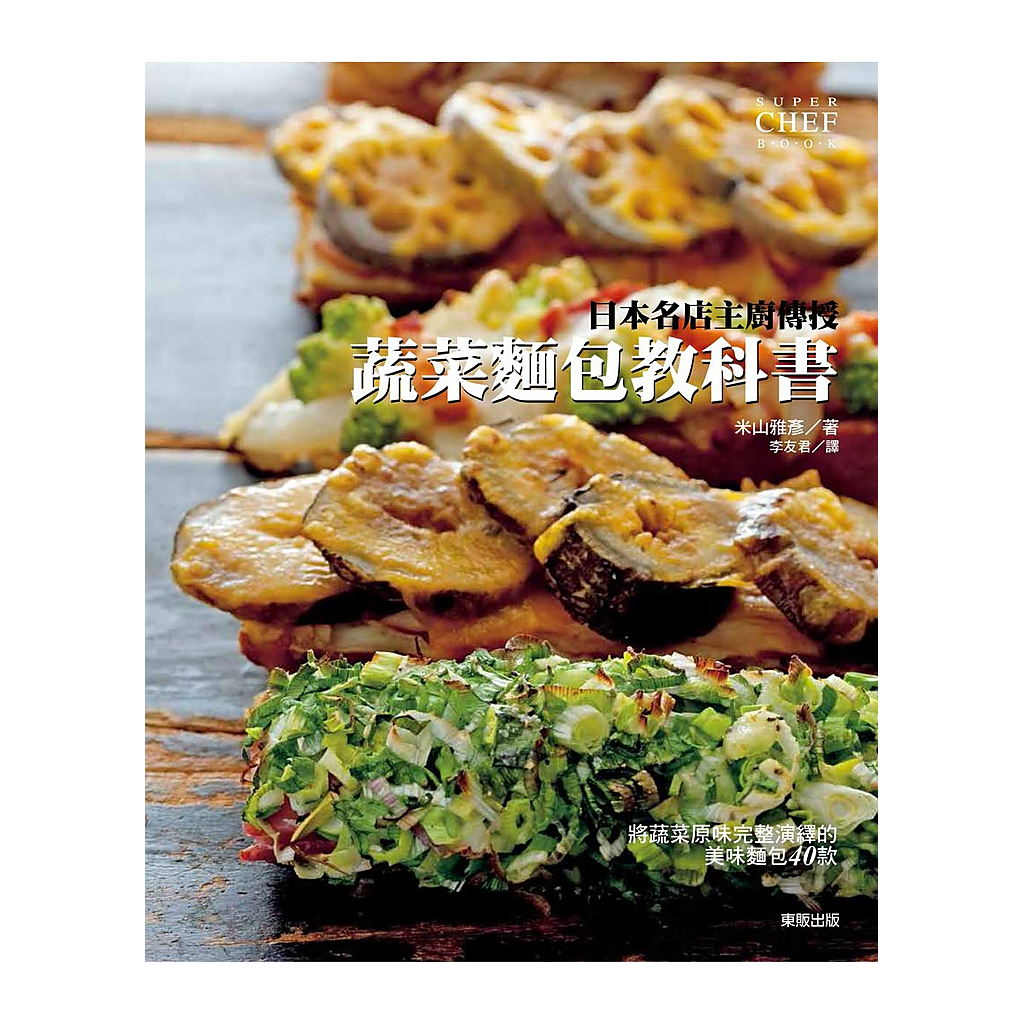
Masahiko Yoneyama 米山雅彥
日本名店主廚傳授:蔬菜麵包教科書
日本名店主廚傳授:蔬菜麵包教科書
Masahiko Yoneyama
米山雅彥
Published 2014
This book makes me look at vegetables differently.
In bread, vegetables are often treated as toppings, colours, or something added to make a product feel healthier. But in this book, vegetables are not secondary. They are the starting point.
Masahiko Yoneyama, chef of painduce, approaches vegetable bread with a very clear idea: the character of the vegetable should come first. Its flavour, colour, shape, texture and even lightness are all part of what the bread should express.
That way of thinking is important to me.
A vegetable bread should not simply be bread with vegetables placed on top. The dough, filling, sauce and baking method all have to support the ingredient. Even the way a vegetable is cut can change how the final bread tastes.
What I like about this book is its sensitivity to balance.
Some vegetables are bold. Some are quiet. Some give sweetness, some give moisture, some bring bitterness, earthiness, colour or fragrance. A baker has to understand these differences, then decide how much to show and how much to hold back.
For me, this book is not only useful for recipes. It reminds me that ingredients have their own voice.
The baker’s job is not always to make the bread louder.
Sometimes, it is to listen carefully enough so the ingredient can speak clearly.
這本書讓我用另一種方式看待蔬菜。
在麵包裡,蔬菜常常只是被當成配料、顏色,或是讓產品看起來比較健康的元素。但在這本書裡,蔬菜不是配角,而是麵包一開始的出發點。
painduce 主廚米山雅彥師傅對蔬菜麵包有一個很清楚的想法:蔬菜本身的個性應該被放在第一位。它的味道、顏色、形狀、口感,甚至清淡的部分,都應該成為麵包想表達的東西。
這樣的思考方式,對我很重要。
蔬菜麵包不應該只是把蔬菜放在麵包上面而已。麵團、餡料、醬料和烘烤方式,都必須一起去配合那個食材。甚至只是切法不同,也會改變最後吃起來的感覺。
我喜歡這本書的地方,是它對「平衡」很敏感。
有些蔬菜很強烈,有些蔬菜很安靜。有些帶來甜味,有些帶來水分,有些帶來苦味、泥土氣息、顏色或香氣。麵包師必須理解這些差別,才知道什麼時候要讓它更突出,什麼時候要收斂一點。
對我來說,這本書不只是用來看配方。
它提醒我,食材本身也有自己的聲音。
麵包師的工作,不一定是把麵包做得更複雜、更強烈。
有時候,是要足夠安靜地聽,讓食材自己說話。
Share